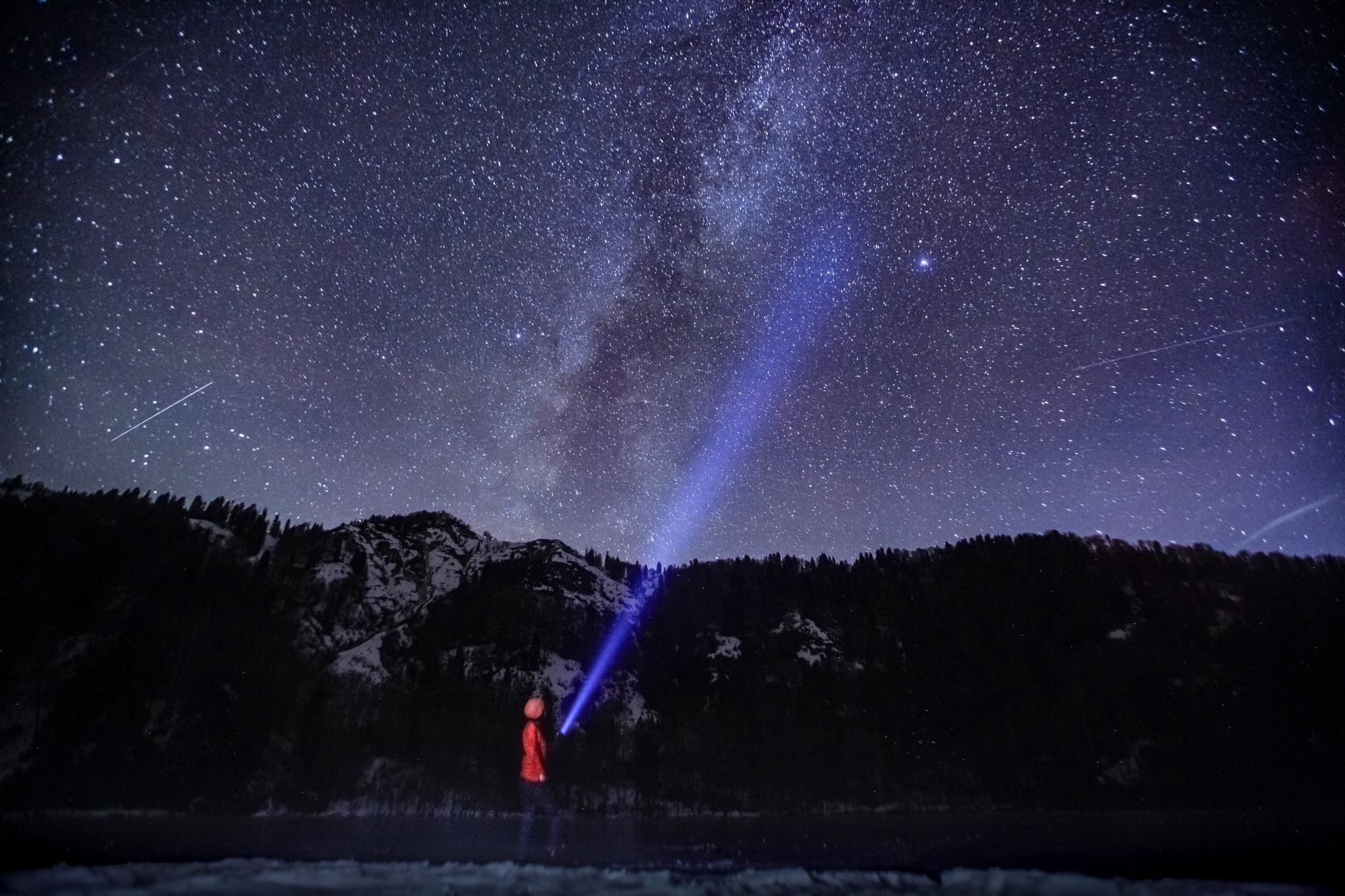
The night sky available to human eyes for most of human history has become largely invisible to the majority of the world's population, obscured by artificial light. But accessible stargazing remains possible with modest preparation, and the experience of seeing a genuinely dark sky for the first time is consistently described as one of the most perspective-shifting natural experiences available.
Getting Started Without Equipment
The naked eye is sufficient for an impressive initial stargazing experience. Learning the major constellations visible from your latitude in each season provides the framework for everything else. Orion in winter, Scorpius in summer, the Big Dipper year-round from most northern locations, these anchor points orient the sky.
The most important variable for naked-eye stargazing is darkness. Light pollution maps available online identify dark sky locations within driving distance of most populated areas. Even 30 to 60 minutes from a major city, sky darkness can improve dramatically. Allowing 20 minutes for dark adaptation, avoiding all white light exposure during this period, increases the number of stars visible by an order of magnitude.
The First Equipment Purchase
Binoculars significantly expand what is visible without the setup complexity of a telescope. A pair of 10x50 binoculars sweeps enough of the sky to reveal the Milky Way structure, individual stars in globular clusters, and the cloud bands on Jupiter. This is a more practical first optics purchase than a telescope, which requires more knowledge to use effectively.
Apps like SkySafari and Stellarium provide real-time sky maps that identify what is visible from your location at any moment, dramatically reducing the identification learning curve.