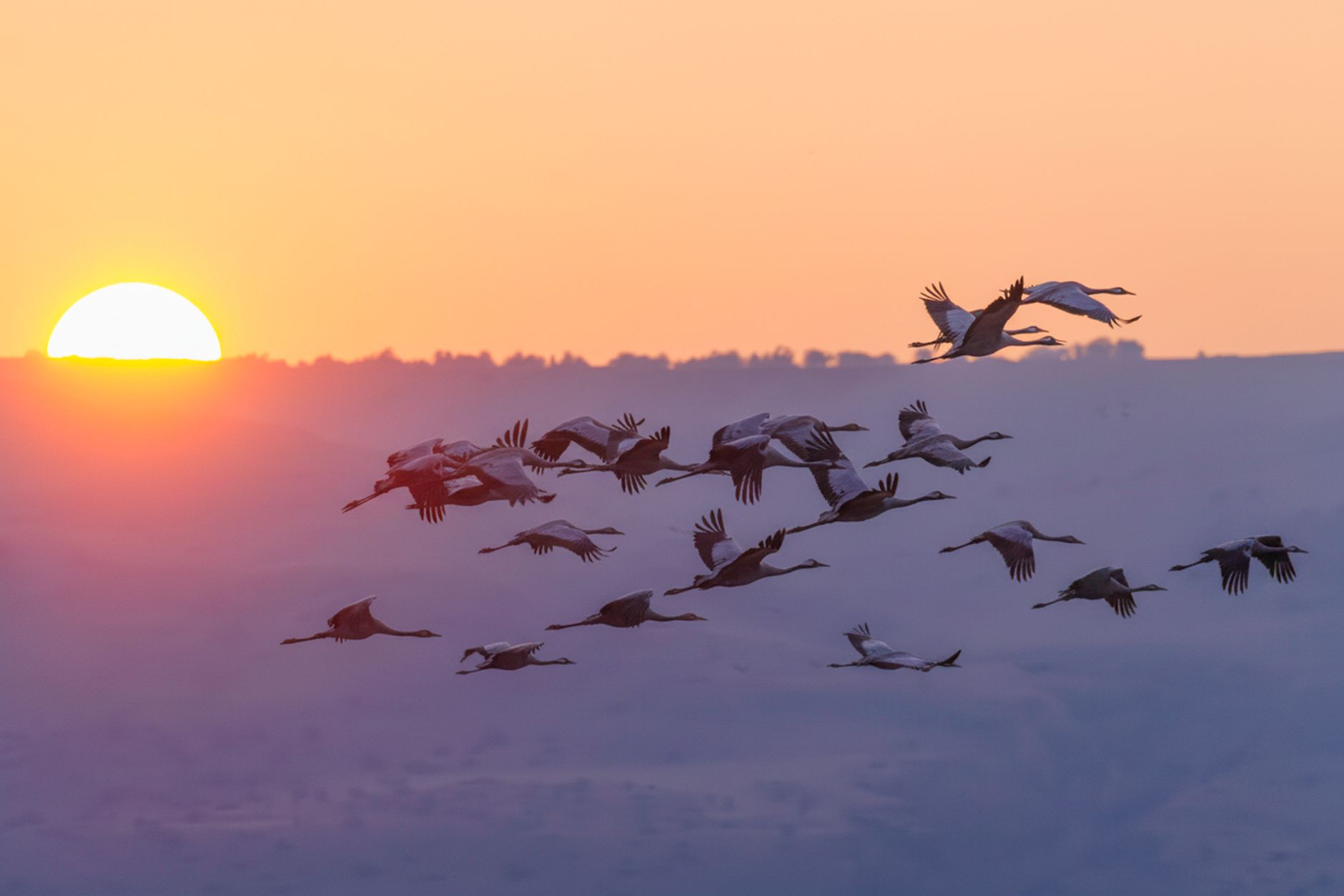
Bird migration is among the most extraordinary regular events in the natural world, and one that unfolds largely unnoticed above the daily lives of most people. Billions of birds move between breeding and wintering grounds each spring and autumn, navigating journeys of thousands of miles with a precision that continues to produce discoveries in navigation science.
How Birds Navigate
Birds use multiple navigation systems simultaneously, cross-referencing them for accuracy. The sun compass tracks solar position and uses an internal time sense to correct for the sun's movement across the day. A magnetic sense allows birds to detect Earth's magnetic field, providing both compass direction and positional information based on field inclination angles.
Celestial navigation using stars is particularly important for nocturnal migrants, who calibrate their magnetic compass against the rotation of the night sky around the celestial north pole. Young birds appear to inherit a genetic template that specifies their migration direction and approximate distance, which they refine with experience over subsequent migrations.
Watching Migration in Real Time
Radar analysis has revealed that migration happens primarily at night, when conditions are calmer and the risk of predation is lower. On peak migration nights in autumn, radar shows dense waves of birds moving at altitudes of hundreds to thousands of feet above cities whose residents are entirely unaware.
Apps like BirdCast translate radar data into migration forecasts and real-time migration maps, allowing anyone to see whether a major migration event is occurring overhead on a given night. Dawn in the day after a heavy migration night, particularly in parks and green spaces, produces extraordinary concentrations of species that are otherwise difficult to observe.