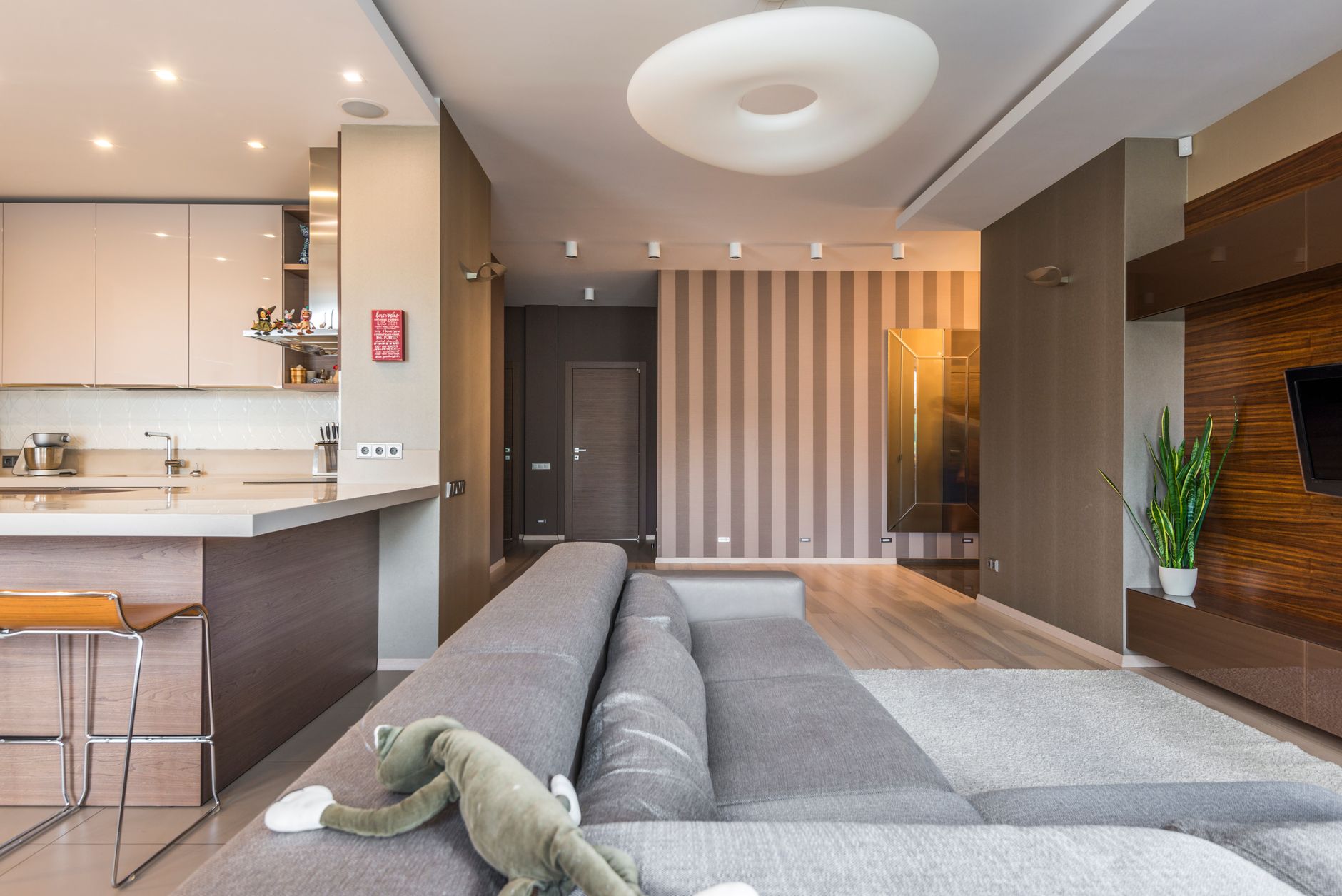
The Secret Isn't What You Add. It's What You Remove.
Interior designers work with a principle that most people intuitively understand but rarely apply: a space feels more expensive not because of what's in it, but because of how deliberately it's been edited.
The homes that stop you mid-scroll — the ones that feel simultaneously luxurious and liveable — almost never achieve that feeling through more objects. They achieve it through fewer, but better-placed, ones.
The technique that professionals return to again and again is called the edit and display method, and it's something you can apply to any room without spending anything.
The Core Principle
Most homes accumulate objects gradually, without intention — gifts kept out of obligation, decor bought impulsively, items migrated from other rooms, collections that grew beyond their welcome. The result is visual noise: a space that feels crowded even when it isn't particularly full.
The edit and display method works by temporarily removing everything from a surface or shelf, then returning only a deliberately curated selection. The objects don't change. The relationship between them does.
How to Do It
Step 1: Clear completely. Remove everything from the surface you're working on. Bookshelves, mantels, coffee tables, sideboards — one at a time, clear them entirely.
Step 2: Group what you have. Lay everything out on the floor or a bed and look at it as a collection. You'll likely notice things you'd genuinely forgotten you had.
Step 3: Edit ruthlessly. Return only one-third to one-half of what you removed. Prioritize:
- Items with genuine personal meaning
- Objects with interesting shapes or textures
- Pieces that share a color story with the room
Step 4: Arrange with intentional space. The space between objects is as important as the objects themselves. Group items in odd numbers (threes work particularly well) and vary heights.
Step 5: Store, donate, or relocate the rest. Objects removed from display don't need to be discarded — but they do need to leave the visual field of the room you're editing.
What Changes
The results of this process are frequently described as disorienting in the best possible way. The same furniture, the same walls, the same lighting — but a room that suddenly feels larger, calmer, and more intentional.
Designers note that visual rest is a genuine psychological experience. When the eye has fewer things competing for attention, it relaxes. The room feels considered rather than accumulated.
The Maintenance Principle
The hardest part of this approach isn't the initial edit — it's resisting the gravitational pull toward gradual re-accumulation. A useful rule: before any new object enters a display space, identify what it will replace. One in, one out.
Apply this to one room this weekend. The transformation requires no shopping, no renovation, and no budget. Just a willingness to see your home differently.
The most powerful design tool you have is subtraction.