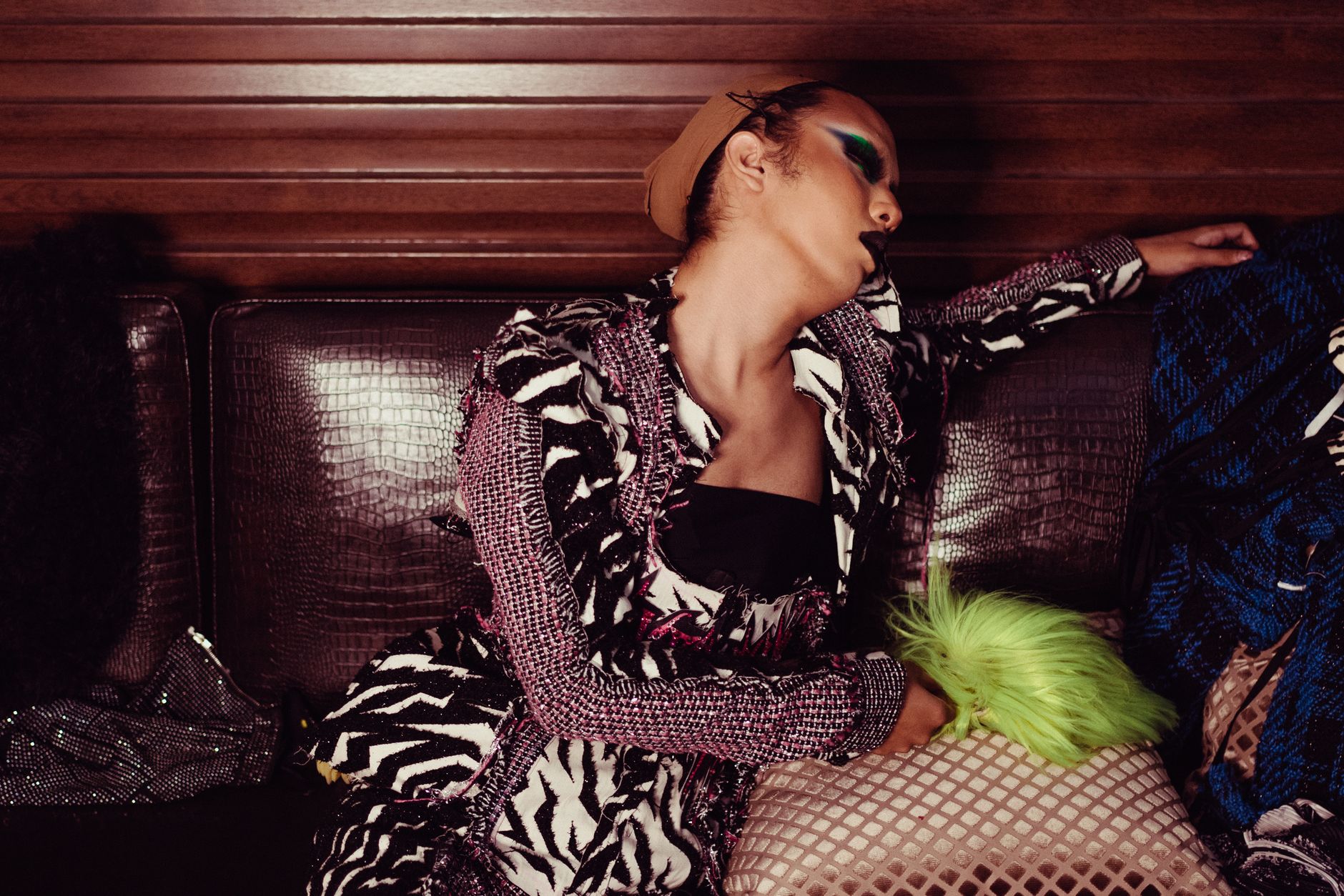
Solange Knowles's fashion has never been separable from her larger artistic identity. Where her sister Beyoncé's fashion tends toward spectacular, carefully executed performance, Solange's approach is more deliberately conceptual, reflecting an interest in fashion history, African design traditions, and the relationship between clothing and cultural identity that goes well beyond personal style.
The A Seat at the Table Visual Identity
The visual world of A Seat at the Table, which Solange developed in parallel with the album's musical identity, drew explicitly on West African design traditions, geometric prints, bold color blocking, and architectural silhouettes that positioned Blackness not as a departure from but as the origin of much of what Western fashion has claimed as its own innovations.
The deliberateness of this visual argument was reflected in her fashion choices across the album's promotional period: designers of African heritage, vintage pieces from Black American designers, and clothing that functioned as cultural scholarship rather than trend participation.
The Ongoing Approach
Since A Seat at the Table, Solange's fashion has continued to operate in this register: architectural, references-rich, and engaged with the politics of visual culture in ways that most celebrity fashion is not. Her appearances at major fashion events consistently produce the most discussed looks precisely because they refuse the conventional register that such events otherwise produce.
The coherence of her fashion with her artistic practice, her visual art, her curatorial work, and her music, makes it function differently than fashion as personal expression alone. It is argument as much as aesthetics.